Eagle on Different Product Templates 14: A Designer's Go-To Asset
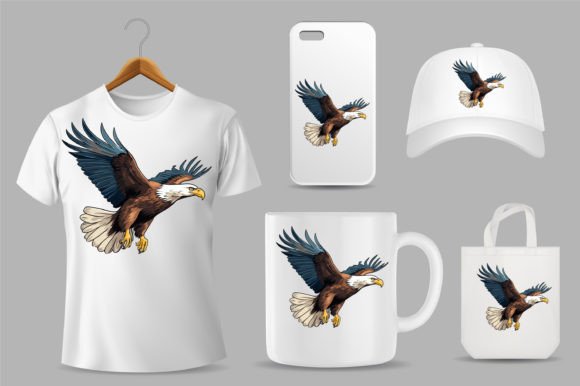
You know that feeling when a project needs a powerful visual anchor, but you're short on time or custom illustration budget? That's exactly where Eagle on Different Product Templates 14 comes in. This isn't just another clip art file; it's a versatile design asset built for real-world application. The collection features a series of bald eagle illustrations, each meticulously crafted and placed on a variety of mockup templates. Think of it as a ready-to-use visual identity kit centered around a symbol of strength and freedom.
The visual style here is clean, modern, and highly adaptable. The eagle illustrations themselves strike a balance between detailed realism and graphic clarity. They aren't overly photographic, which means they scale beautifully and maintain their impact whether used large on a banner or small on a business card. The accompanying templates showcase these eagles in context—on t-shirts, mugs, notebooks, and more—giving you immediate inspiration for application. The overall personality is bold, patriotic, and professional, making it suitable for brands and projects that want to convey authority, resilience, and classic American appeal.
Where This Eagle Design Truly Takes Flight
The practical value of Eagle on Different Product Templates 14 lies in its directness. You're not just getting an illustration; you're getting a problem-solver. For clothing printing, the 300 DPI, 100% print-ready files ensure crisp output on fabrics. For engraving businesses, the pure vector shapes allow for flawless resizing and adaptation to laser or rotary machines. Need stickers or printable decorations for an event? The easy-to-edit nature and color changeability mean you can match it to any palette in minutes.
It extends further. Scrapbooking enthusiasts and crafters will find the EPS format compatible with most cutting machines and design software. Small business owners can leverage the templates for quick mockups of branded merchandise, from canvas prints to promotional items. Bloggers and content creators can use the eagles in social media graphics to add a strong visual element to posts about motivation, American history, or outdoor themes. The templates essentially do the heavy lifting of presentation, allowing you to focus on the message.
Making the Most of a Bold Visual
Using a strong symbol like an eagle requires some strategic thinking. In logo design or brand identity work, this asset can serve as a powerful central mark or a secondary emblem. Its strength influences visual hierarchy immediately—it will naturally draw the eye, so pair it with cleaner, simpler typography. Consider a sans serif font for headlines or a premium font with good readability for body copy to let the eagle illustration be the star without causing visual competition.
For editorial design or packaging design, the eagle can add a layer of narrative. It could work for a story about conservation, a product line with a rugged or patriotic theme, or marketing materials for a security firm. The key is context. Does the eagle's inherent symbolism align with your project's core message? If yes, it can significantly boost brand perception and audience engagement by tapping into shared cultural associations.
When evaluating fit, open the files in Adobe Illustrator. The fact that it's the CC version ensures compatibility with modern workflows. Test the font pairing with your existing typefaces. Because the eagle is a display element, you'll want your text to support it, not fight it. Review the included templates not as final products, but as starting points. Can you change the background color? Swap out the mockup? The 100% color changeable feature is your best friend here. Always check the licensing for your intended commercial use—this is standard practice for any design assets to ensure your professional work is fully compliant.
Ultimately, Eagle on Different Product Templates 14 is a practical tool for the designer or creator who needs impact without the custom commission timeline. It’s about having a reliable, high-quality element in your toolkit that you can pull out when the brief calls for it. Use it to tell a stronger visual story, streamline your production process, and deliver polished, context-rich designs that resonate.